
Spatial audio makes online conversation legible because people can hear where attention is coming from. SpatialChat turns that cue into a room people can move through. Instead of a feed they must decode, they get a space they can navigate. The difference sounds subtle until a room gets busy. Then it becomes the difference between easy conversation and constant translation.
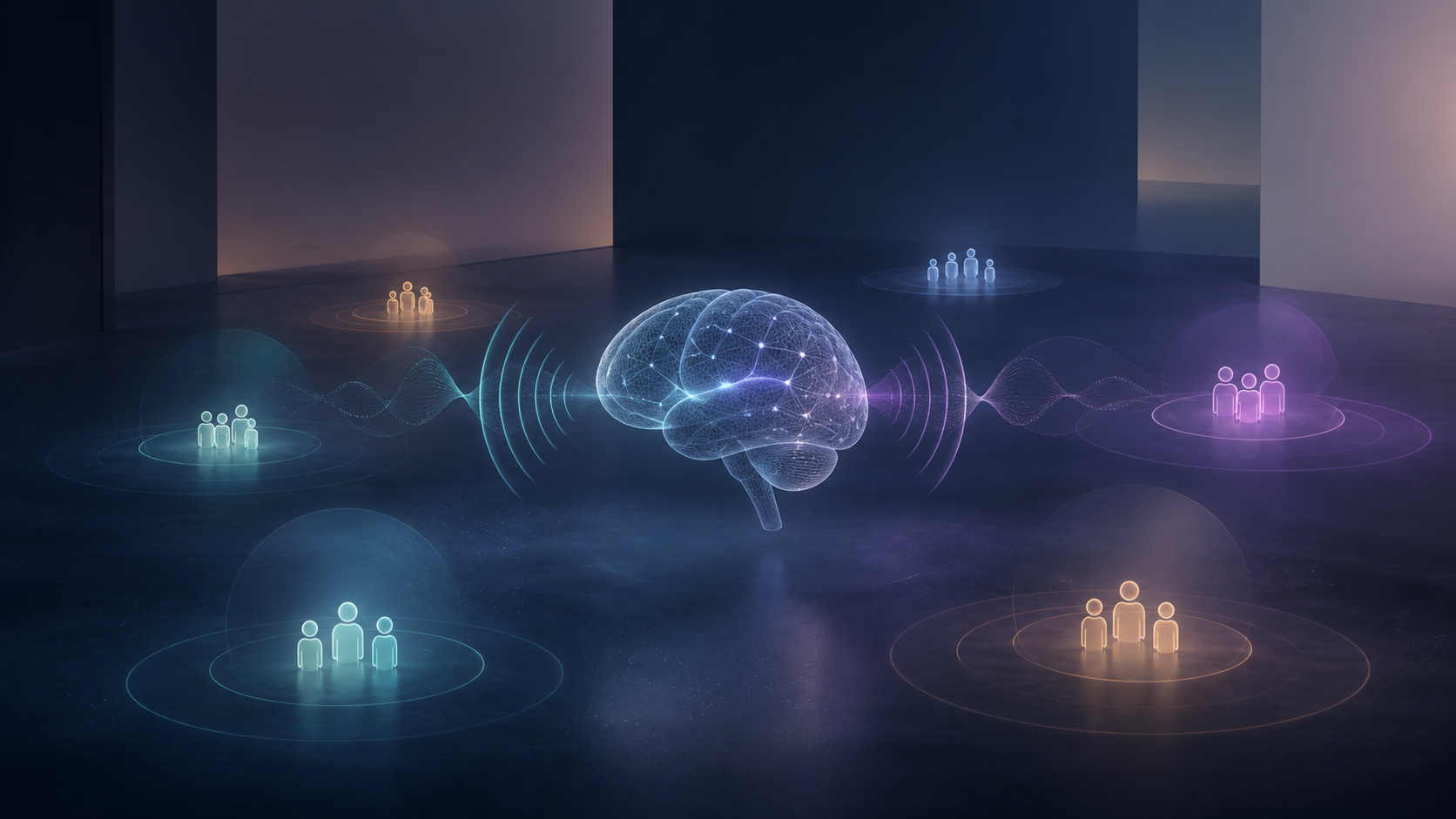
The 2025 Frontiers in Neuroscience study gives that intuition a firmer base. It found that binaural directional audio improved mental representation and spatial navigation. In plain language, direction helped the brain build a better map. This matters for spatial sound because online conversation is never only about speech. It is also about finding the right cluster, understanding whether a group is open, and deciding when to step in.
For buyers comparing virtual workspaces and event tools, that is the useful distinction. A platform can carry voices and still make the room hard to read. Or it can help people move with less friction. SpatialChat sits in the second category. It uses proximity-based sound to make the room understandable while conversation is happening. That change is not cosmetic; it alters behavior.
What the neuroscience actually supports
The most useful thing about the study is also the most modest. It does not prove that every interface with directional audio is superior. It proves that directional sound changes how people represent an environment. That distinction matters because product claims in this space often get inflated. The wrong reading is that directional audio is magic. The right reading is that the brain responds to spatial cues in ways that help people orient more quickly. In physical settings, orientation happens automatically. We hear direction, distance, and motion before we think about them. The study suggests that preserving those cues digitally helps the mind build a more usable map. This is not just a sound-quality story; it is an interaction story.
In a video call, all voices collapse into the same center point. The user has to work harder to infer who is near whom, who is still listening, and which exchange is worth joining. In a spatial room, those signals are audible. That reduces the burden on the participant. Instead of constantly decoding the interface, people can focus on the conversation itself. The practical takeaway is narrow but important. Buyers should not ask whether a tool has audio; they should ask whether the audio helps people understand where they are in relation to others. If people cannot orient themselves quickly, the platform is making them spend energy on positioning before they spend any on dialogue.
The study also gives an evidence-backed way to talk about quality without sliding into hype. It supports the claim that spatial cues improve mental mapping. It does not support the lazy claim that every room becomes better by default. Operators need a standard they can defend. They need to know what improved cognition looks like in a product decision, not just in a lab result. One more point matters: the brain does not separate conversation from environment as neatly as software teams often do. People listen to the room before they listen to the speaker. If the room is legible, the exchange is easier to enter. The research therefore supports a stronger product question. Does the collaboration platform help users understand the room, or does it flatten every interaction into a generic stream? The answer determines whether the platform is built for attendance or for interaction.
Why flat audio makes every room harder to use
Most video calls and many collaboration tools still treat audio as a transport layer. They move sound from one person to another, but they do not help people understand the social situation. That seems fine in a small meeting. It becomes expensive in any room with multiple conversations, side remarks, or informal movement. Participants spend attention figuring out who is speaking, whether a group is open, and how to join without interrupting. That hidden work adds up fast. In virtual workspaces, this hidden work shows up as drift. The room looks active, yet actual conversation slows down. Every participant must interpret the interface first.
Flat audio also blurs important social cues. Newcomers cannot tell whether a conversation is private, semi-open, or fully available; they have to guess. Guessing changes behavior. Some stay silent longer than they should. Others interrupt too early. Still others never join at all. That is not a minor usability issue. It is the difference between a room that feels social and a room that feels staged. This is why so many video calls feel more tiring than necessary. The meeting may be simple, but the interface forces users to do interpretive work that a physical room would handle for them. Direction-based audio reduces that tax by giving the ear something useful to work with. It lets people hear proximity and direction instead of forcing them to infer everything from a participant list. The strongest collaboration tools do not just transmit voices, they create a room model people can understand instantly.
SpatialChat is built around that idea. The platform makes movement part of the conversation. Users do not have to narrate every transition; they can approach, listen, join, and leave with less ceremony. Spatial Audio Research Finally Proves What Event Designers Always Knew reaches the same conclusion from a different angle. The value is not decorative realism, but that people can read what the room is doing. A class reunion in a browser tab shows the same pattern in a more human context. The technology works when people can move naturally, without a tutorial telling them how to socialize. This is the real contrast with flat tools. They can deliver sound, but they do not help people know when a conversation is forming, opening, or closing. For buyers, that difference should matter more than another feature label on a comparison sheet.
What SpatialChat changes in the interaction model
SpatialChat changes the interaction model because it ties sound to distance. When people move closer, they hear more; when they move away, the room fades. That behavior is simple enough that users understand it immediately. It is meaningful enough to change how the room works. In practice, a host does not have to choreograph every exchange. A product team can hold an open workshop and let side conversations form naturally. A community manager can run office hours without forcing everyone through a rigid queue. The room can also support multiple kinds of attention at once. One cluster stays active while another forms nearby, and the soundscape still makes sense. A good collaboration platform should not force every conversation into the same shape. A networking session, a support hour, and a team retro all depend on different levels of movement. SpatialChat is useful when the work depends on those transitions. It helps people feel the difference between listening nearby and joining fully.
That difference is easy to miss if you only look at surface features. It becomes obvious when you watch a new participant enter a room and immediately understand where to go. In that moment, the product has already done work. It has reduced hesitation, lowered the cost of joining, and made the environment intelligible without a host translating every signal. When proximity-based audio is done well, it does not just make sound feel richer; it makes social movement easier. This is especially valuable in hybrid programs where people are used to passive interfaces. The room can still support structured moments while leaving space for the informal exchange that often creates the most value. Once buyers see the room this way, the category stops looking like a feature race and starts looking like a question of whether the platform helps people handle live conversation.
The buyer test: can the room be read without narration?
There is a simple decision rule buyers can use. If moving closer to someone does not change what you hear within a second or two, the tool is not helping people read the room. It may still route audio, but it is not making the conversation legible. Procurement teams should use that line when comparing products. A platform can look polished and still fail the actual room test.
Use this test in four steps:
- Bring in a newcomer and do not explain the interface. Ask whether they can infer where the active conversation is just by listening.
- Ask them to move toward a group and then away from it. If the auditory change is weak or delayed, the room is still acting like a flat grid.
- Create overlapping clusters. If the environment becomes confusing the moment more than one conversation starts, the product is not built for real social movement.
- Ask whether the room is still understandable when activity rises. A demo that works with five people and collapses at twenty is not a good collaboration environment.
This test separates delivery from legibility. A tool can move sound and still fail to help users make sense of the situation. That is the mistake many buyers make when comparing virtual workspaces. They treat audio as a checkbox instead of as a navigation aid. Directional audio only earns its keep when it helps people decide what to do next. If it does not change the next move, it is mostly decoration. The evaluation should include newcomers, not just power users. Experienced participants can often compensate for weak design. Newcomers reveal whether the room explains itself. SpatialChat tends to perform well on this test because the room tells people how to act. The user does not need a guide to understand proximity, openness, or movement. That lowers onboarding cost and makes the room easier to scale across programs. The practical lesson is not that every organization needs the same room shape. It is that every organization should demand a room that can be read without narration.
What operators should watch after rollout
Selection is only half the work. The way a team operates the room determines whether spatial audio feels natural or chaotic. The first thing to watch is density. A room too empty can feel dead. A room too crowded can blur into noise. The useful middle keeps clusters visible and boundaries clear. Second, onboarding: users must understand that movement matters. If the host never explains proximity, people may treat the room like another static video call and miss the benefit. Third, moderation: a spatial room is not a free-for-all. Hosts still need ways to guide traffic, reset attention, and keep the main thread from getting lost. That operational layer is where a platform like SpatialChat earns trust. It gives teams enough flexibility for spontaneous conversation without losing enough structure to make the room hard to run.
Teams should also measure practical signals after launch. Do people join faster? Do they leave side conversations without awkward transitions? Do first-time attendees participate sooner? If those answers improve, the platform is doing more than sounding better. It is reducing friction in real conversation. Do not evaluate spatial audio as an audio feature; evaluate it as a behavior change. When the room works, people spend less time decoding and more time engaging. That is the metric that matters. A spatial room is not a universal replacement for every meeting type. It is a better fit when success depends on informal movement, quick entry, and easy exit. Good operators pick the right format, teach the room rules, and then measure whether the conversation gets easier to join.
Why this is a collaboration decision, not a feature checkbox
Buyers are trained to compare tools by feature list. That hides the real question: not whether the platform has spatial audio, but whether it changes how people experience online conversation. The neuroscience gives a mechanism behind the experience. It shows why directional sound helps people build a mental map and why that map reduces friction. It also explains why some tools still feel like glorified conference rooms. They may support many functions, but they do not help users orient socially. For product leaders, a legible room changes behavior. An illegible room forces people back into admin mode. Buyers should treat this as a collaboration decision. The platform must match the way the organization actually talks. If the work depends on office hours, learning sessions, sponsor conversations, or casual networking, the platform needs to make those transitions audible. If it cannot, the interface is asking users to do the work the room itself should have done.
SpatialChat is built for the opposite outcome. It uses proximity-based sound to make the environment easier to read, which makes the conversation easier to enter. The buying rule is straightforward. If a platform cannot make proximity audible and legible at the same time, it is still optimized for attendance, not interaction. Apply that standard before purchase and after rollout. It keeps teams focused on how the product behaves in real use, not on how impressive the demo sounds. That is the distinction that matters. A strong collaboration platform does not just carry voices; it helps people know where to go, what is open, and when to move.